
 October 2026
What do you do?
For the past 5 years, I have been head of nursing at Evelina London for surgery, theatres and anaesthesia. Together with the clinical director and general manager, I'm responsible for managing the surgery, theatres and anaesthesia directorate.
11 years at Evelina London and 5 years into being a head of nursing, I am increasingly asked what comes next.
The honest answer is that I am thinking less about the next senior leadership role and more about what I do with the influence I currently have. How do I lead and manage? And most of all, how do I turn up for my friends and family?
What does career progression mean to you?
Progression can easily become shorthand for moving up or moving on, as though staying in a role means standing still.
I am much more interested now in what happens between the formal milestones: the coaching conversation that shifts someone’s thinking, the relationship that opens an unexpected door, or the opportunity that helps someone see something in themselves they had not seen before.
What do you love most about your role?
I love seeing talent and potential in people, often before they see it in themselves.
My passion for developing people sees me often call them “my children”, which is slightly ironic because my actual daughter also works within the Trust. She is now an established nurse and leader in her own right, taking the baton forward through inclusive leadership, developing others and creating opportunities for those coming behind her. Lyncia, my daughter, is team leader for Patch, a service that aims to give every child a fairer, healthier future.
What does leadership mean to you?
I lead people and improve services because the quality of our leadership directly influences the quality of care our children and families receive.
Much of senior leadership is about leading through and empowering others, and luckily, I do none of it alone.
I may take the call, ask the questions or help shape the response, but I rely on strong people and strong relationships to turn that into action. I have a green chair next to me which is rarely empty. Someone will come by to think something through, ask for help, challenge an idea or simply talk because no individual has it totally worked out. My camera may go off in a meeting because somebody needs me in that moment.
Those conversations are often where influence happens.
How do you encourage equality, diversity and inclusion through your role?
Diversity of thought, not just diversity of colour, is very important to me.
Sometimes my perspective does not align with the status quo, but I often still say what I think, even when that is challenging or risks me being seen as a disruptor.
I hold the discomfort!
My equality, diversity and inclusion ambitions have changed in part because of the progress I have seen in addressing racism and improving access to education and development.
Of course, I continue to facilitate Black history webinars, promote equality, diversity and inclusion and advocate for equality for those who need it, but I am now more interested in what happens after access is granted. Is there belonging? Is there growth? Can people truly contribute, be recognised and genuinely progress? And, once they have influence of their own, are they willing to hold the door open for somebody else?
In 2021, shortly after becoming a head of nursing, someone I had never met wrote to me on LinkedIn: “grain by grain we break the ceiling.”
That still resonates with me because “breaking through a ceiling” matters.
Using your influence so that fewer people encounter that ceiling in the first place matters even more.
Why is celebrating Black History Month important?
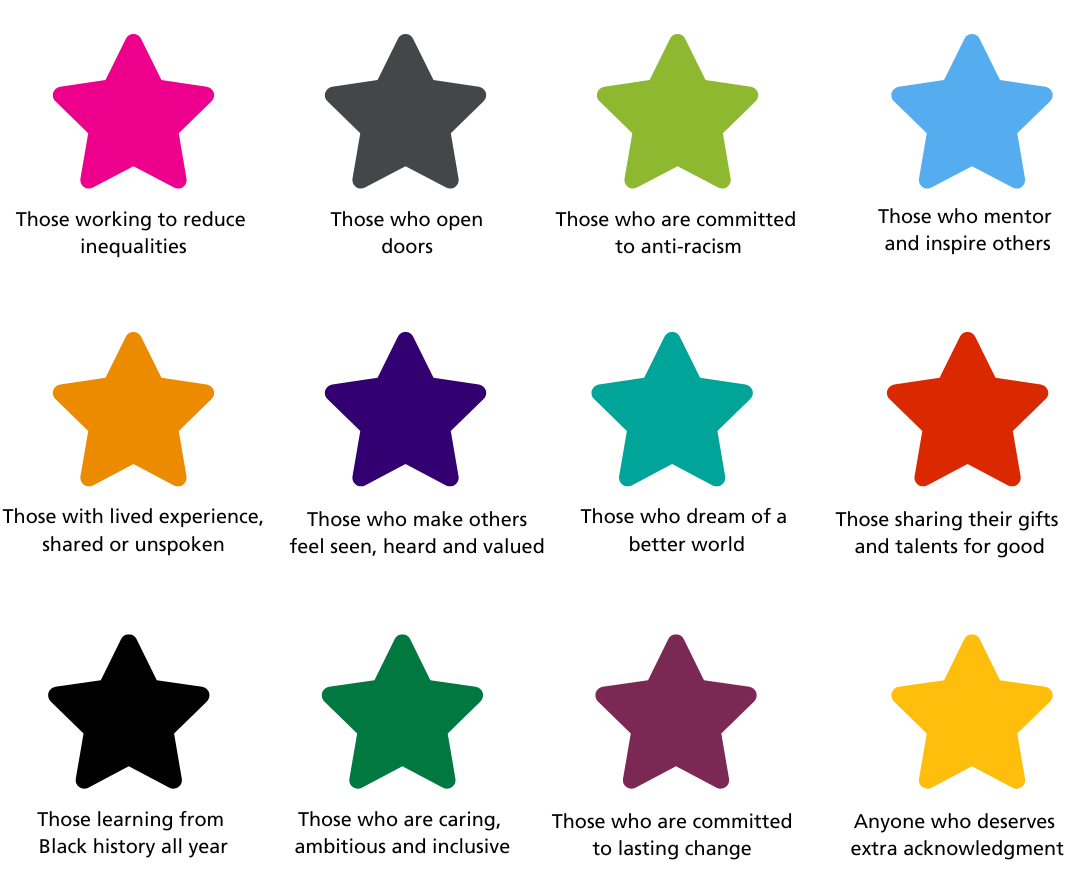
This year’s Black History Month theme is 'honouring our communities'. For me, this is an important time to shine a light on those whose contributions sometimes go unseen.
So here is a star for:
Thank you to the children and young people who have so brilliantly illustrated our blog pages.